
Fixing the Boring Stuff
Care delivery, circuit boards, Bitcoin insurance, and FDA paperwork
Hey,
Welcome to another issue of Why Join.
Sponsored by Delve

Don’t Let SOC 2 Kill Your Startup
A startup was on the rise—steady growth, happy customers, investors circling. Then a big prospect asked for SOC 2.
They signed up with one of the big platforms. Suddenly: endless tasks, confusing checklists, engineers pulled off product. Deals stalled. Competitors moved in.
Those competitors? They used Delve.
15 hours later, they were audit-ready and closed the deal.
The first startup never recovered. One by one, their deals slipped away. Keys handed over. Game over.
Don’t be that startup.
Delve automates compliance—SOC 2, ISO 27001, HIPAA, GDPR, PCI-DSS and more—so you’re ready in days, not months.
Today, compliance is done in Delve.
Book a demo, use WHYJOIN1KOFF for 1K off.
P.S. Want to sponsor this newsletter? Simply reply to this email or book one here.
Latest in startups
🇺🇸 Zingage
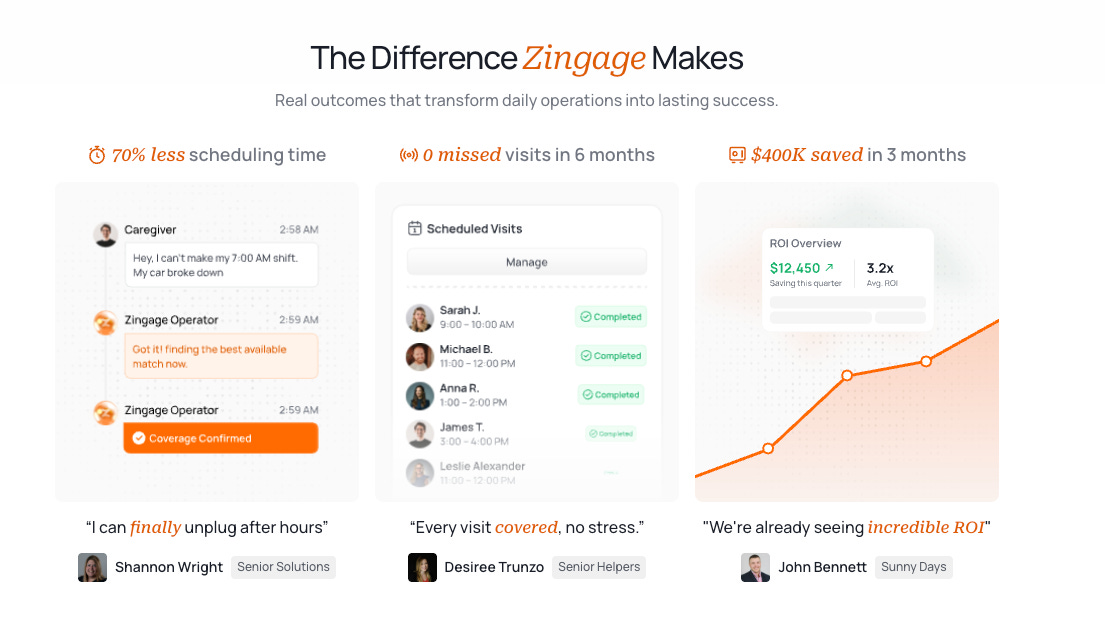
Funding - Seed, $12.5M; Investors - Bessemer Venture Partners (lead), TQ Ventures, South Park Commons, WndrCo
Zingage is an AI-powered care delivery platform for home-based healthcare providers. It acts as an “AI Secretary” that automates scheduling, staffing, and compliance, helping agencies manage 24/7 care logistics with reliability and scale. The platform is built around two products: Operator, which manages everything from patient intake to billing, and Perform, a caregiver engagement app that improves retention through gamified incentives.
The home care system is under pressure. Aging populations, rising costs, and patient preference are driving a $500 billion shift toward care delivered at home, yet most agencies still run on phone calls and spreadsheets. Nearly 80% of professional caregivers leave within their first 100 days, leaving schedulers scrambling to fill visits with tools built for billing, not logistics.
Zingage replaces that manual coordination with AI trained on real operational data. Operator learns from staffing patterns to predict gaps, optimize assignments, and communicate directly with caregivers and patients through voice AI. Shifts are filled before they fail, documentation is completed automatically for payers, and managers can handle twice the patient volume without burnout.
Hiring: Founding Backend Engineer, Head of Talent Engineering, Product Operations, Software Engineer (Intern or Co-Op), Software Engineer (New Grads) - New York
🇺🇸 Quilter
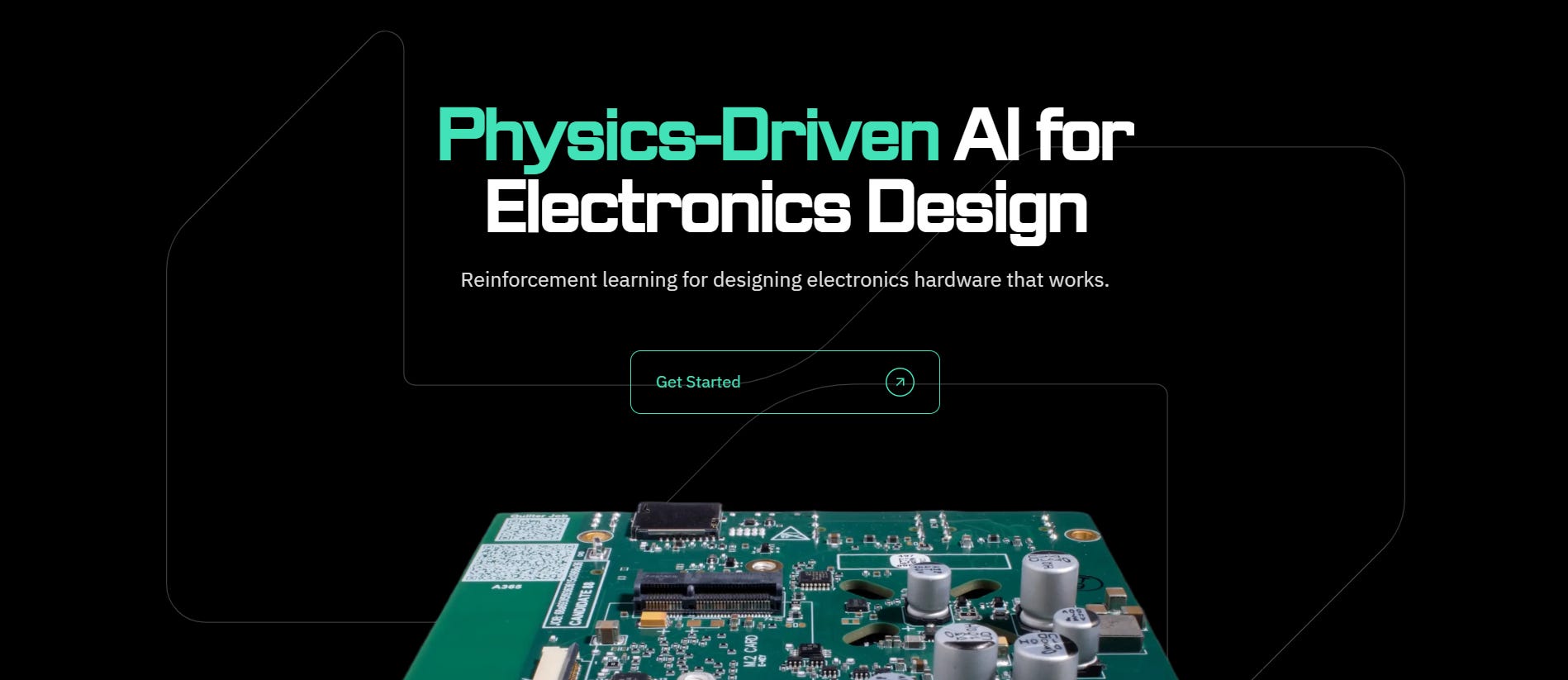
Funding - Series B, $25M; Investors - Index Ventures (lead)
Quilter is building a physics-driven AI engine for printed circuit board (PCB) layout. After engineers design a circuit schematic, they still spend weeks manually routing thousands of electrical connections, placing components, and validating that every trace meets electrical, thermal, and manufacturing constraints. The process involves constant back-and-forth between design and fabrication tools, slowing down hardware development.
Quilter automates that entire stage. Rather than learning from human layouts, its platform is trained on the first principles of electronics—electromagnetic interactions, signal integrity, thermal dissipation, and manufacturability. Using reinforcement learning, it generates and evaluates millions of potential layouts, optimizing each for performance, reliability, and cost.
The output is a fully routed, DRC-clean board that meets all design rules and is ready for fabrication, often produced in hours instead of weeks. Engineers upload their schematics and constraints—board outline, stack-up, critical nets, keep-outs—and receive fabrication-ready files that can be opened directly in tools like Altium, KiCAD, or Cadence.
In short, Quilter aims to do for circuit boards what a compiler does for software: take high-level intent and automatically produce a manufacturable design.
Hiring: Senior ML Ops Engineer, Senior Fullstack Engineer, Platform Engineer (Senior, Staff, or Principal level), Senior/Staff Software Engineer (C++) - Remote (US)
🇧🇲 Meanwhile

Funding - $82M; Investors - Bain Capital, Haun Ventures, Apollo, Northwestern Mutual Future Ventures, Pantera Capital, Stillmark
Meanwhile is a fully regulated life insurance company that runs entirely on Bitcoin. Licensed by the Bermuda Monetary Authority, it issues policies, collects premiums, and pays death benefits all in BTC—no conversions to fiat. The company operates like a traditional insurer but swaps bonds for Bitcoin: it keeps a portion of reserves in cold storage and lends the rest to large, regulated institutions through secured, overcollateralized BTC loans. Those loans earn predictable returns that fund policy growth and future claims, allowing Meanwhile to function as a solvency-backed insurer with a Bitcoin balance sheet.
Bitcoin holders finally have real financial infrastructure. Selling BTC to fund insurance or inheritance triggers taxes and defeats the store-of-value thesis. Meanwhile lets users save, borrow, and plan estates directly in Bitcoin—keeping exposure while earning yield through a regulated, audited framework.
🇺🇸 Peer AI
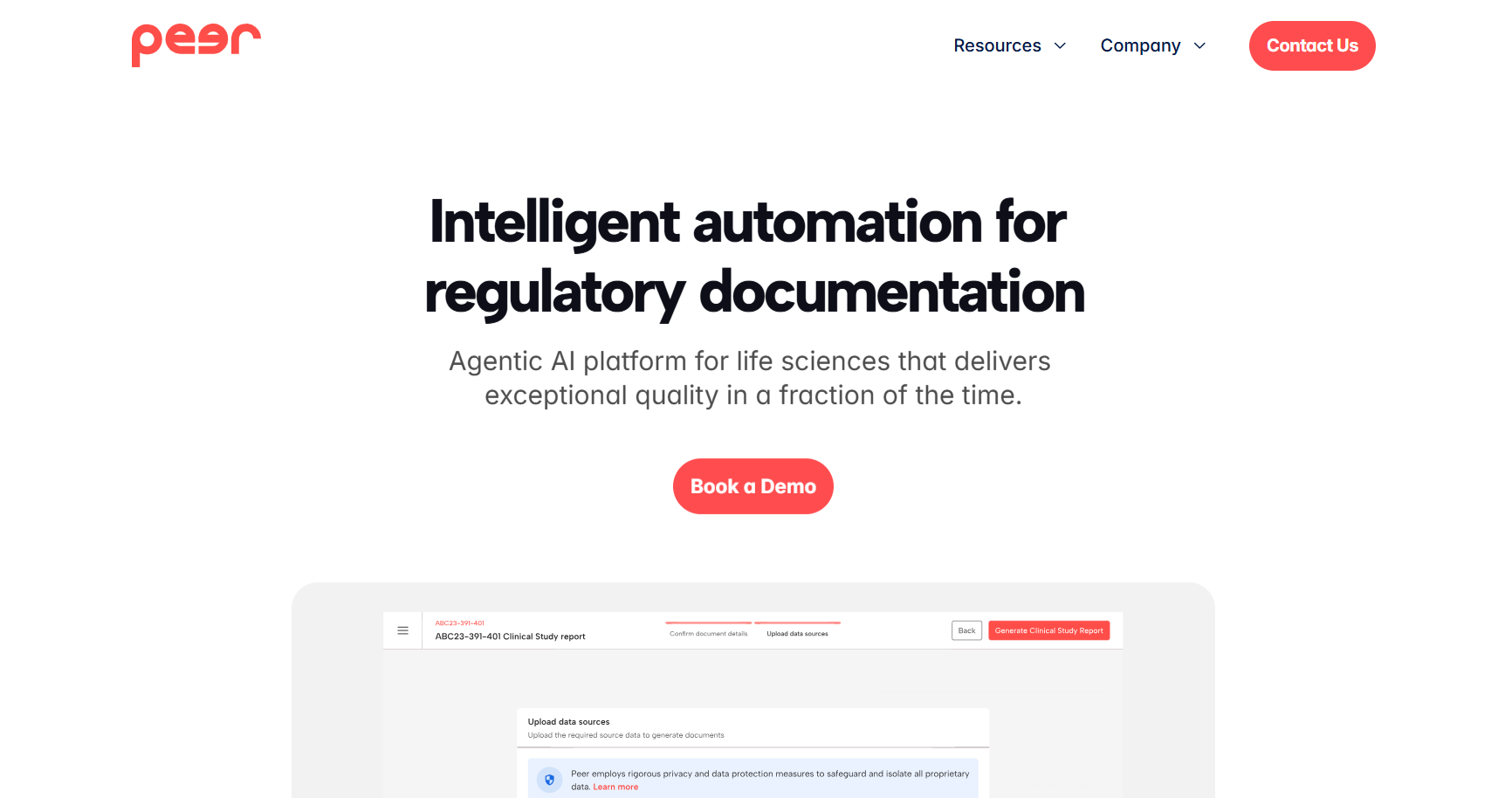
Funding - $12.1M; Investors - Flare Capital Partners (co-lead), SignalFire (co-lead), Greycroft, Atria, Alumni Ventures, Gaingels, Mana Ventures
Peer AI is developing an agentic AI platform for life sciences that accelerates regulatory documentation across clinical, pre-clinical, and manufacturing phases. It provides a unified workspace for authoring, managing, and validating regulated documents, with human oversight built directly into the workflow.
Regulatory writing remains one of drug development’s biggest bottlenecks. Peer AI cites that new drugs often require over 200,000 pages across 1,500+ regulated documents. Around one-third of FDA submissions contain quality issues, and roughly three-quarters of applications face rejection or delay, often extending review cycles by over a year.
Peer AI uses document-specific agents to draft, propagate data, edit, and perform quality checks. Its Intelligent Template Builder auto-generates document frameworks aligned with regulatory standards, while human medical writers verify outputs at key control points to ensure compliance and traceability. Reported results show drafting speeds 55-94% faster, with clinical study reports reduced from 40 to 17 days and protocol development from 6-8 weeks to one week.
Hiring: Account Executive - Emerging & Mid-Sized Biotechs, Regulatory Medical Writer (Contract), Senior AI Backend Engineer, Senior AI Engineer - Agentic Systems & LLM Evaluations, Senior Full Stack Engineer - Generative AI & Product Engineering - Bay Area/Remote
Top news
Anysphere, maker of Cursor, is in talks over new funding at a $30B valuation: The AI coding startup hit $500M in ARR and raised $900M in June at a $9.9B valuation from Thrive, Accel, and Andreessen Horowitz.
China tightens rare earth exports (again): Beijing added five more rare earth elements to its export control list, bringing the total to 12. Foreign producers now need licenses to export products containing Chinese-origin minerals or tech. Defense users are banned, while semiconductor use will be reviewed case-by-case.
Samsung’s AI lab in Montreal trained a 7M-parameter model called Tiny Recursive Model (TRM) that beat Gemini 2.5 Pro, o3-mini-high, and DeepSeek-R1 on the ARC-AGI benchmark. TRM hit 45% accuracy on ARC-AGI 1 and 7.8% on ARC-AGI 2, trained in just two days on four H100 GPUs for under $500. Instead of scaling parameters, TRM refines answers in loops. The study, “Less is More,” argues small recursive models can reason better on focused tasks than large LLMs.
OpenAI expands ChatGPT Go: The $5 plan is now live in 16 new Asian countries including Malaysia, Thailand, Vietnam, Pakistan, and the Philippines (with local payment options). It offers higher limits, more memory, and faster responses. After launches in India and Indonesia, paid users in India have doubled and SEA usage is up 4x.
n8n $180M Series C: Berlin-based AI automation startup n8n raised $180M at a $2.5B valuation led by Accel with Sequoia, Visionaries Club, and Nvidia’s NVentures joining. The round follows its $60M Series B at $350M (Mar ’25). n8n automates repetitive tasks, now has 230K users and $40M ARR.
xAI $20B raise: Elon Musk’s AI startup xAI is expanding its ongoing funding round to $20B, backed by Nvidia, Apollo Global, Valor Capital, and others. The deal combines $7.5B in equity and up to $12.5B in debt through a special purpose vehicle that will buy Nvidia chips and lease them to xAI for its Colossus 2 data center in Memphis. Nvidia is investing about $2B directly, part of a broader push to accelerate AI infrastructure spending. xAI has raised $10B this year and burns about $1B a month.
AI insurance is pricey: OpenAI and Anthropic are struggling to secure full coverage for AI-related risks as insurers hesitate over the scale of potential losses. OpenAI’s broker, Aon, reportedly arranged up to $300M in coverage (some say less), far short of what’s needed for massive copyright suits or broader “systemic” AI failures. With insurers unable to price existential risk, OpenAI may set up a captive insurance vehicle using investor funds to insure itself.
Polymarket $2B deal: NYSE parent ICE is investing up to $2B in Polymarket, valuing it at $8B and making 27-year-old founder Shayne Coplan the youngest self-made billionaire. It follows Polymarket’s $112M acquisition of QCX, a CFTC-licensed exchange, paving its US return. The platform still awaits regulatory approval; globally, it holds 31% market share behind Kalshi’s 67%.
Gemini 2.5 Computer Use: Google launched a new Gemini model that can use a web browser like a person, clicking, typing, and scrolling to fetch data not available through APIs. It can fill forms, test interfaces, and handle basic on-screen tasks. Unlike ChatGPT Agent or Anthropic’s tools, Gemini’s system runs only inside a browser, not across an OS, and supports 13 actions so far. Developers can try it through Google AI Studio, Vertex AI, or via a live demo on Browserbase.
Tesla unveils cheaper EVs: Tesla launched new Model 3 and Y trims priced at $37K and $40K—about $5K less—as federal tax credits expire. The stripped versions have cloth interiors and fewer features but retain ~320-mile range, aiming to compete with Hyundai, GM, and Nissan’s sub-$35K EVs.
Open roles
Andreessen Horowitz: Research Intern, Crypto - New York
Bandana: Content Creator/Producer, Social Media Intern, Animation/Illustration Intern, Business Development Intern, Business Development Representative (New Grad) - New York
Cogent: Fullstack Engineer, AI/ML Engineer, Backend Engineer - San Francisco/New York
Paramark: Integrated Marketing Manager, Marketing & Content Manager, Marketing Program Manager - San Francisco
Resolve AI: Backend Engineer, Frontend Engineer, Growth Marketing Lead, Marketing Operations Lead, Enterprise Account Executive, Social Media Lead, Senior Brand Designer, Sales Development Representative, Recruiting Coordinator, Technical Recruiter - San Francisco
Harmonic: Software Engineer Intern (Summer ‘26), Product Engineer, Discovery, Software Engineer (Fullstack), Growth Analyst, (New Grad), Account Executive - New York
First Resonance: VP of Engineering, Customer Success Manager, Senior Technical Product Manager, Senior AI Engineer - Los Angeles
Fold: Lead Mobile QA Engineer (iOS & Android), Communications Manager - Remote (US)
Dune Security: Solutions Engineer, Senior Fullstack Engineer - New York
That’s all for today. Add us to your contacts or hit reply so we stay out of spam. Not your thing? Unsubscribe anytime below.
See you Saturday,
Chief